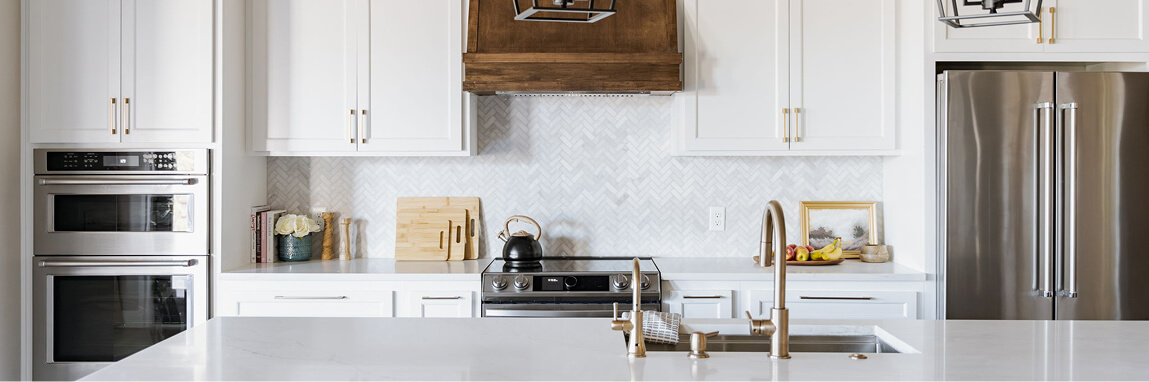
Walk-in showers are beautiful. They can make a bathroom feel open, simplify daily routines, and create the kind of clean-lined...
READ MORESep 11, 2026 | by Rebecca Muller
A Hospitality Mindset Across Industries

What if hospitality had nothing to do with hotels or restaurants?
For Rebecca, hospitality is a way of leading, building trust, and creating experiences that make people feel genuinely cared for. At a recent Business Over Cocktails event at Rose Creek Golf Club, she shared how the lessons she learned in hospitality became the foundation for leading businesses far beyond the industry—and why the standard of care matters just as much in construction, design, and management as it does in a hotel.
Here’s what Rebecca had to say.
Thank you all so much for having me tonight, and thank you to our hosts for putting this together. I love a room full of people who are willing to think about their business from a different angle, because that’s exactly what I want to talk about tonight.
Most people hear the word hospitality and think restaurants, hotels, room service. And that is where I spent over a decade of my career. But what I’ve come to believe, after all those years in that world and now several years building companies outside of it, is that hospitality was never really about the industry. It’s a way of seeing every business you’re ever part of.
Tonight is about what happens when you carry that lens somewhere it isn’t expected. I’m an owner of two companies that most people wouldn’t guess would be run by someone with a hospitality background: a design-build firm and an interior design studio. But that background isn’t incidental to how those companies work. It’s the reason they work the way they do.
My roots in hospitality go back to my very first jobs in the industry, and they carried me through years of operations, brand management, and eventually opening a hotel from the ground up. In that world, you often have one night, maybe two, to make an impression. There’s no second chance to get it right, and every single moment matters. And here’s the part that took me years to really understand: you’re never serving one preference. One guest loves a firm mattress, the next wants it soft. One wants to be left alone, the next wants to be remembered by name at breakfast. You can’t win on any single preference, because you’re never going to please everyone on the details. What you can build is an experience that transcends those individual preferences. Something bigger than any one touchpoint, that people feel taken care of by, regardless of what they personally would have chosen.
That’s the lesson I carried out of hospitality and into everything since: hospitality isn’t a department. It isn’t a smile at the front desk or a mint on the pillow. It’s an operating philosophy. Every single touchpoint in a business, whether someone is a guest, a client, or an employee, is a chance to make them feel taken care of, even when you can’t control every variable they’d personally prefer.
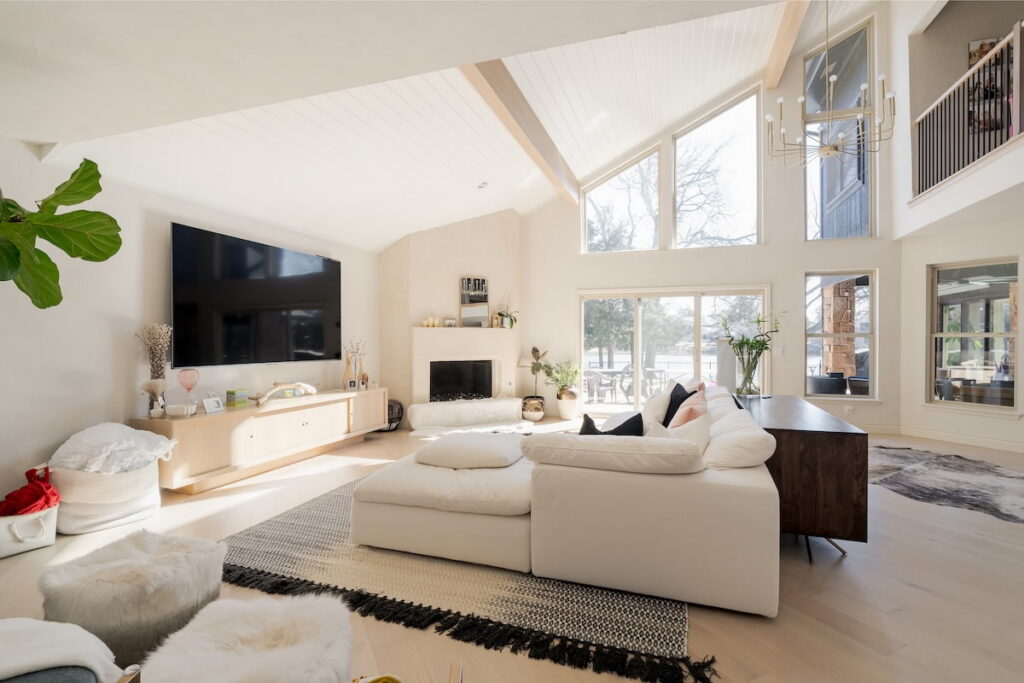
So the natural question is, how does someone with that background end up running a design-build firm? The honest answer is, I didn’t set out to. I became a client first.
My husband Mike and I were faced with a decision a lot of families in this room have probably faced. We loved our neighborhood, our community, our people. But we were outgrowing our home. We could leave, or we could reinvest in the space we already had. We chose to stay, and we turned our attic into a full second story.
That renovation put me on the other side of the table for the first time in my career, as the client instead of the operator. And it was eye-opening. The craftsmanship was there. The vision was there. But I felt, viscerally, the moments where a hospitality standard was missing. The communication gaps. The friction of not quite knowing what was happening with your own home. As someone who had spent a decade obsessing over exactly those touchpoints for hotel guests, I couldn’t unsee it. I knew there was a better way to make clients feel, and once I’d felt that gap myself, I couldn’t pretend I hadn’t.
So I did what I imagine a lot of people in this room would do. I told Chris Reed, flat out, “I have notes.” What I thought would be a quick coffee turned into a three-hour conversation. I walked in with a list of observations and walked out having, apparently, made an impression, because I was hired almost immediately after. The rest, as they say, is history.
I want to be clear: nobody hands you a hard hat and a set of blueprints because you know how to fluff a pillow. This was not the plan. But apparently “I have notes” is a more compelling pitch than I realized. I’ve since learned that in hospitality, the worst thing that happens is a cold coffee. In construction, it’s load-bearing. The stakes changed. The standard didn’t.
I stepped into a leadership role at Ten Key because I believed I could bring a perspective the industry needed. But believing it and proving it are two different things, and the first months were about closing the gaps I’d felt firsthand as a client. That meant building out standardized processes, clarifying what clients could expect and when, and putting real structure around communication so that no one ever had to wonder what was happening with their own home.
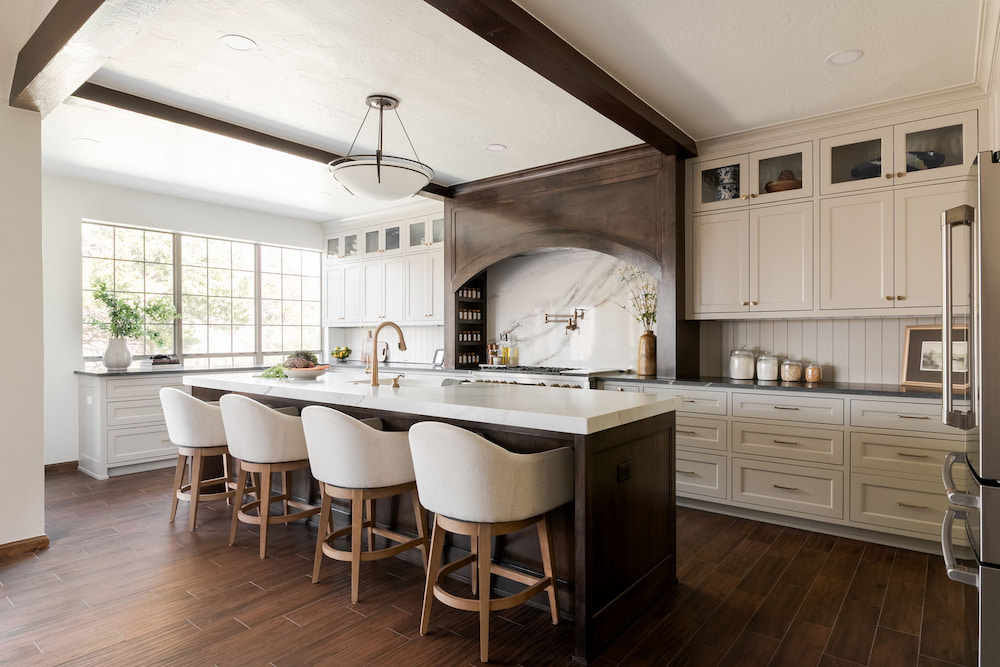
I’ll be honest with you, bringing that kind of structure and service standard into an industry that has historically run on hustle and instinct was not universally welcomed on day one. There was skepticism. There was resistance from people who had built successful careers without any of this, and who reasonably wondered why they needed it now. Working through that took patience, and it took proving the value through results rather than through argument. Over time, the same people who questioned it became some of its strongest advocates, because they saw what it did for their clients and for their own day-to-day lives.
That mindset shows up in three places for me, and I want to walk you through all three.
The first is client-facing. It’s the journey from the very first conversation about a project to the final walkthrough, built around the idea of no surprises. Clients should never feel like they’re chasing information about their own investment. They should feel genuinely cared for through what is, for most people, one of the more stressful processes they’ll ever go through.
It’s rarely the big reveal that clients remember. It’s smaller than that. It’s a project manager calling before a client has to call and ask. It’s a designer noticing a family has a toddler and quietly childproofing a walkthrough. Those are the moments nobody puts in a proposal, and they’re the ones that get repeated at dinner parties. That’s the same standard I held at Bradford House, where every touchpoint, from check-in to checkout, was designed so a guest felt looked after without having to ask.
The second is internal, with our teams. Here’s the thing I’ve learned the hard way: you cannot deliver hospitality to clients if you aren’t practicing it with the people who work for you. Culture and clarity aren’t a nice add-on; they’re the foundation. If I want my team to extend genuine care to every client, I have to extend that same care to them first, in how I lead and how I treat their time and their growth. Morale isn’t something you check on after the fact. It’s an input, not an afterthought.
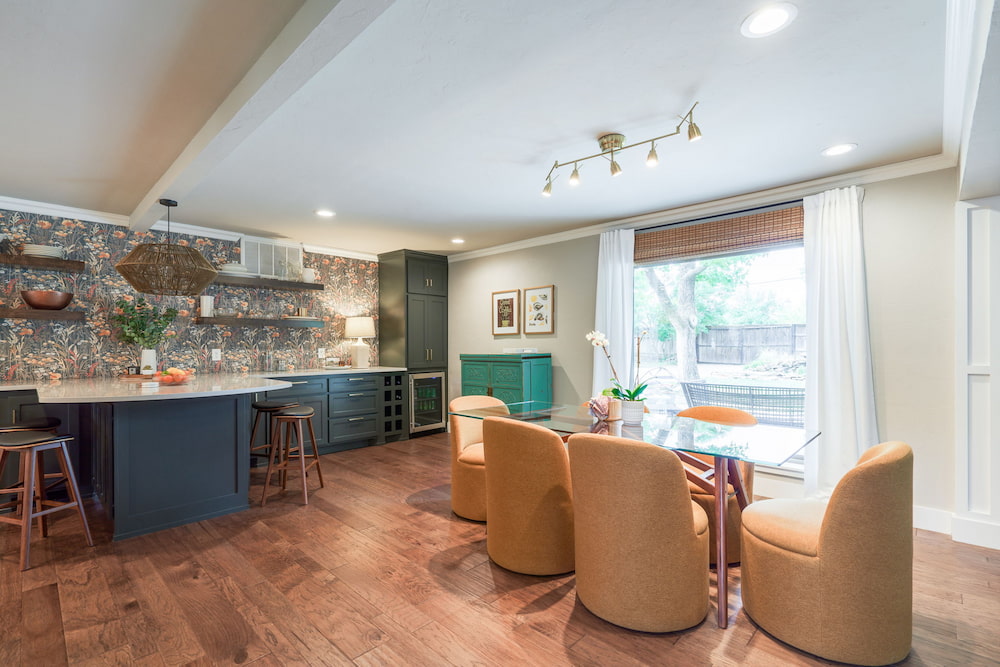
The third is trust, specifically the trust that made it possible to bring Heather Lay Interiors and Ten Key together under one vision. That partnership didn’t happen because of a business plan on paper. It happened because of a track record, built client by client and employee by employee, that proved design and construction could operate under the same standard of care from conception all the way through completion. We talk about it simply: two studios, one vision.
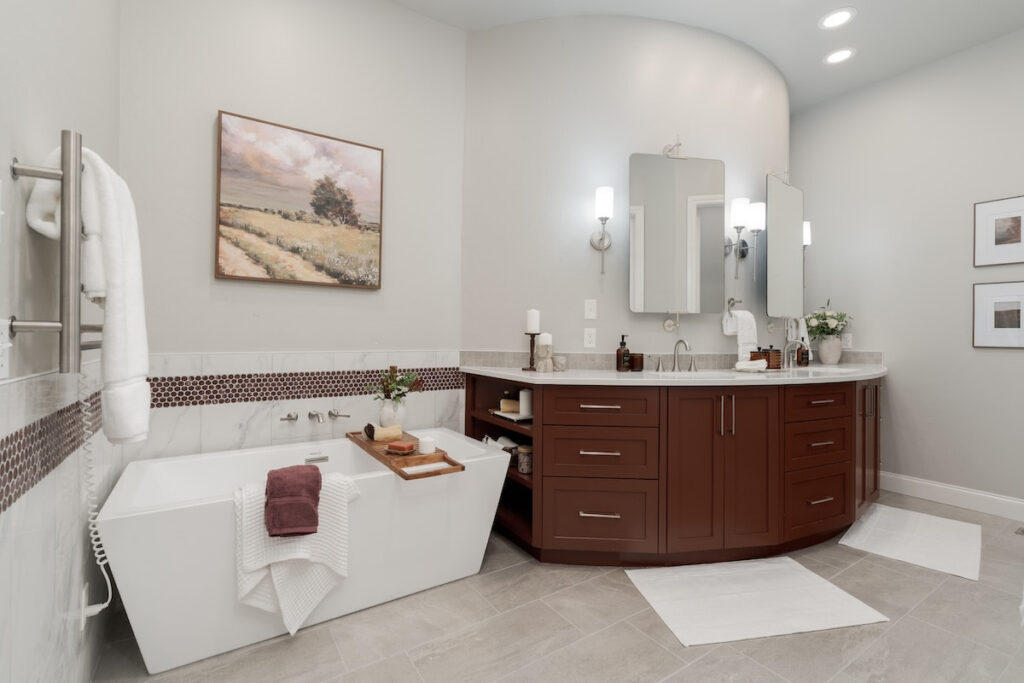
But I want to spend a minute on why that partnership actually matters, because I don’t think it’s just a nice story about two businesses getting along. When you bring design and construction under one roof, you eliminate the handoff points where client experience usually breaks down. The moment when the interior designer’s vision gets lost in translation to the general contractor. The moment when nobody owns the timeline because two separate companies are pointing at each other. Strategic partnership, done right, isn’t about combining logos. It’s about removing the seams a client would otherwise fall through. That’s what creates real value, and that’s what supports growth that actually lasts, because you’re not just winning one project; you’re building a client experience so seamless they refer you before they’ve even finished walking through their own front door.
Here’s where I want to zoom all the way out, because this has stopped being just a story about two companies to me. What’s worked across Heather Lay Interiors and Ten Key has become a foundation for something bigger. I’ve started formalizing that same hospitality-driven operating approach into an actual management structure, a way of holding multiple businesses under one operating philosophy so the standard doesn’t live in my head; it lives in the systems. That’s the difference between a lucky partnership and a repeatable one. A management company structure lets you take what worked between two businesses and use it as a blueprint for the third, the fourth, whatever comes next, without having to reinvent the culture and the client standard from scratch every single time. It’s how you go from being a good operator of one business to being a builder of businesses.
Because here’s what I’ve learned firsthand: morale and money are not a trade-off. Done right, one drives the other. A team that feels cared for delivers a client experience that clients talk about, and that client experience is what actually grows revenue. Since we put these systems in place, a significant portion of our business has come from referrals, not marketing spend. That’s not an accident. That’s what happens when the experience does the selling for you. It isn’t a soft add-on to the real business. It is the business.
So this isn’t really a design-build story, and it isn’t really an interiors story. It’s a management philosophy, and it will translate to whatever room you’re sitting in tonight, whatever industry brought you here.
Now, I didn’t come up here just to tell you a story. I want to leave you with something to actually do with it. So here’s my challenge to you, whatever business is sitting behind your name tag tonight.
First, go find your own seams. Every business has a handoff point where the client experience quietly falls apart, the moment where one department stops owning something and nobody has picked it up yet. Go find yours this week. It’s probably somewhere you’ve stopped noticing because you’re used to it.
Second, ask yourself if you’re treating morale like an input or an afterthought. Not a survey once a year. An actual daily practice of taking care of the people who take care of your clients. If you can’t point to something concrete you did for your team this month, that’s your sign.
Third, look for the partnership you’ve been hesitant to make real. Most of us have a relationship, a vendor, a collaborator, someone we already trust, where formalizing that trust into something more structured could remove friction for the people we both serve. You don’t need a huge announcement. You need one seam removed.
And last, whatever you build, build it so it doesn’t live only in your head. If the standard only exists because you’re in the room, it isn’t a business yet; it’s a habit. Write it down, systemize it, hand it to someone else to carry so it can grow past you.
So I’ll leave you with the same thought I opened with. Hospitality was never the industry I was in. It’s the standard I refuse to leave behind. The room you’re standing in already has a client in it. Go treat them like a guest.